
What the Future holds for the U.S. Department of Education
Overview:
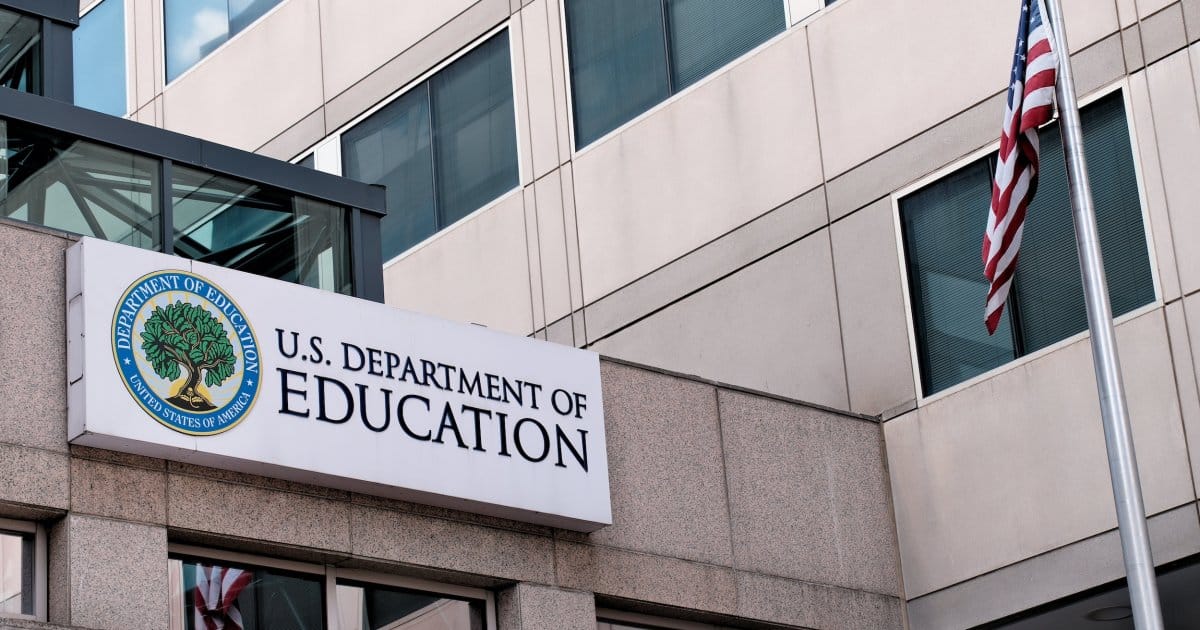
On March 20th, 2025, President Donald Trump made headlines across the political spectrum by signing an executive order calling for the dismantling of the U.S. Department of Education in an attempt to return authority over education to states and local communities.
While the executive order initiates the process, completely abolishing the Department of Education would require an act of Congress — which, as of now, has not been formally submitted.
The order instructs Secretary of Education Linda McMahon to:
- Reassign the department’s functions to other federal agencies where possible
- Reduce staffing
- Eliminate programs not mandated by law
Critical functions such as student loans and Pell Grants are to remain intact during this transition.
The Left:
Democrats have strongly condemned President Trump’s order, viewing it as an unconstitutional overreach that threatens public education and equity.
House Education and Workforce Ranking Member Bobby Scott emphasized that abolishing a federal agency requires an act of Congress, and stated the executive order will be challenged in court. Democrats argue that the move undermines the legislative process and sets a dangerous precedent for future abuse of power.
Lawmakers warn that dismantling the Department could:
- Jeopardize support for low-income families
- Undermine services for students with disabilities
- Harm English language learners
- Exacerbate existing disparities
- Reduce accountability in education
A coalition of Democratic state attorneys general, including Kris Mayes (D-AZ), has filed lawsuits challenging Trump’s order, arguing it violates federal law and disproportionately harms vulnerable students.
Other high-profile officials joined the protest, such as Senator Cory Booker (D-NJ), who delivered a 25-hour speech on the Senate floor, highlighting the potential negative impacts on students and educators.
Democrats are mobilizing through legal action, legislation, and public advocacy, emphasizing the importance of federal support in safeguarding educational access and fairness.
The Right:
Senator Bill Cassidy (R-La.), chair of the Senate Health, Education, Labor, and Pensions Committee, praised the executive order and pledged to introduce legislation to shut down the agency. House Republicans have expressed similar support.
Other GOP lawmakers — including Representatives Thomas Massie (R-KY.), Michael Rulli (R-OH), and David Rouzer (R-NC) — are actively drafting or backing legislation to abolish the department.
Republicans argue this move will:
- Return authority to parents and local communities
- Enable more tailored, effective educational policies
- Reduce federal overreach
The order also redirects federal funding toward school choice programs and away from diversity, equity, and inclusion (DEI) initiatives. Supporters see this as a way to empower parents and reduce what they consider politically biased curricula.
While supportive, Republicans acknowledge that congressional approval is necessary to fully dismantle the department — and that bipartisan cooperation will be difficult to secure. Nonetheless it is a battle they are prepared for.
Nibbles Take
Firstly I want to clear up some misconceptions on the responsibilities of The Department of Education which was created to centralize federal education programs and policies and does not control school curriculum, textbooks, or testing standards.
It’s core responsibilities includes:
- Distributing federal funding to schools and education programs
- Enforcing federal education laws, including civil rights protections
- Collecting data and conducting research on schools across the U.S.
- Overseeing student financial aid, like Pell Grants and federal student loans
- Supporting special education services
If the department were to dismantle, its responsibilities would likely be either transferred to other federal agencies — such as the Department of Health and Human Services (for early childhood education), the Treasury (for student loans), and the Department of Justice (for civil rights enforcement) — or handed off to individual states, aligning with Trump's efforts to give them more control over education policy.
Without a careful transition plan (which had not been fully provided to the public), we could see growing disparities in education quality between states. Schools might receive less consistent funding, especially those serving low-income or special-needs students. Oversight of civil rights, standardized testing, and financial aid could become weakened.
In short some communities might gain more local flexibility, but others could be left without critical support.
My biggest worry? The separation of church and state.
The Department of Education doesn’t directly police religion in schools, but it plays a vital role through the Office for Civil Rights. It ensures that schools don’t promote or require prayer, protects students’ right to practice their religion freely, and investigates complaints when religious freedom is violated.
This concern isn’t theoretical. We’re already seeing states like Louisiana, which now mandates that all public school classrooms display the Ten Commandments from the King James Bible, and Oklahoma, where State Superintendent Ryan Walters, has directed public schools to incorporate the Bible into lessons for grades 5 through 12.
As the future of the Department unfolds, Nibbles will keep you updated on what it means for students, schools, and the role of government in education.