The Fight for Free Speech: What Kirk’s Death Set in Motion
Overview
A month after the death of conservative activist Charlie Kirk, the divide between his supporters, critics, and the federal government continues to widen.
Following Kirk’s shooting social media was filled with tributes from supporters mixed with dark humor and mockery from his critics and internet trolls.
In response, officials in the Trump administration vowed to punish anyone who “glorified violence,” while universities and employers faced pressure to discipline staff, and state leaders began treating such commentary as hate speech.
The fallout has been intense.
- The Department of Defense is investigating hundreds of personnel over online comments about Kirk.
- Jimmy Kimmel’s brief suspension has reignited questions about satire, mischaracterization, and what can be said on network TV.
- Current polls show a growing number of Americans feel their free speech rights are being chipped away.
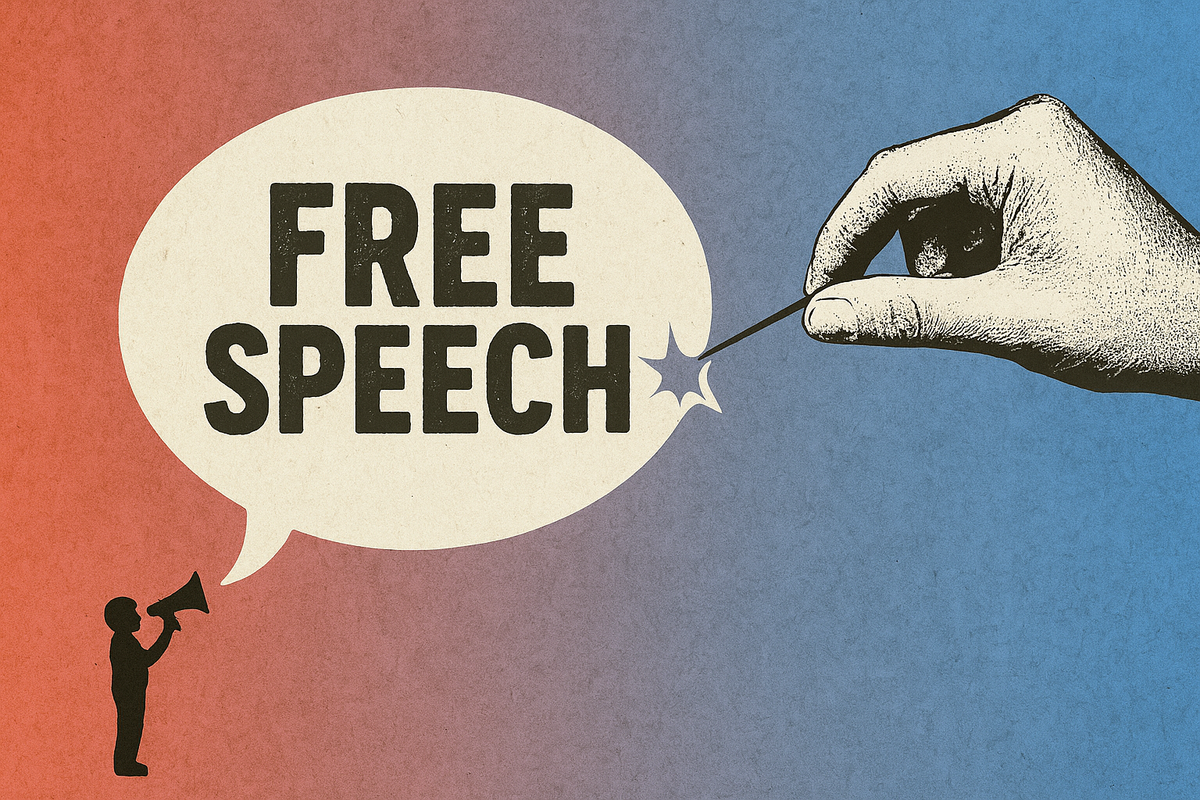
As the fight over free speech enters a new, uneasy phase, let’s take a deeper look at how Americans feel about the federal government’s reach into one of the nation’s most protected rights.
The Push for Crackdowns “Free Speech Has Limits”
To supporters, unchecked “hate speech” and online trolling have poisoned public dialogue, and Kirk’s death is the most extreme example.
Notable statements and actions:
- President Donald Trump pledged to “reclaim free speech from the violent left,” framing new penalties as restoring order, not restricting rights.¹
- Texas Governor Greg Abbott pushed for the expulsion of a student who praised Kirk’s death, while several GOP governors urged employers to terminate workers posting “hate-filled commentary.”²
- Trump-aligned lawmakers are drafting proposals to penalize “digital glorification of violence” and broaden hate-speech enforcement online.³
In their view, these limits aren’t necessarily censorship but ethical maintenance.
The Pushback “Protect the Ugly Speech Too”
Civil-liberties advocates, legal scholars, and even some conservatives see the government’s reaction as dangerous overreach and a disregard for the First Amendment.
Notable statements and impact:
- Critics highlight Kirk’s own words: he had insisted that “hate speech does not exist legally in America,” making it ironic that his death is now being used to justify restricting the same speech he defended.⁴
- Barack Obama condemned the assassination but warned that “free societies can’t ban offensive words every time emotions run high.”⁵
- Civil-liberties lawyers cite hundreds of university suspensions and federal employee probes as examples of “government jawboning” pressure that silence speech even when courts later reverse it.⁶
To the opposing side, the danger isn’t ugly posts, it’s the normalization of state-sanctioned punishment.
Public Mood
Recent YouGov polling shows a majority of Americans disapprove of how the Trump administration has handled free-speech issues since the Kirk killing.
58% say their expressive rights feel “less secure than a year ago,” while 42% support “some restrictions” on speech that glorifies violence.⁷
Nibbles Take
As a founding principle of American freedom, it’s easy to see why this debate is so charged. And while I share almost no political ground with the late Charlie Kirk, it’s worth remembering that he was one of the most vocal defenders of unrestricted speech in modern conservative politics. He argued that even “hate speech” should remain protected, a stance few politicians on either side would touch.
To now see the administration using his death to justify new limits on the First Amendment is strange, but not surprising. We’ve already watched student protesters face harsh backlash for demonstrations that, while disruptive, still fall under protected expression. The pattern is clear: speech that offends those in power is the first to be labeled dangerous.
One of the biggest issues in how this is being handled is hypocrisy.
Vice President JD Vance has dismissed reports of Nazi-related group chats among young conservatives as “boys being boys,”⁸ yet he’s called on employers to fire anyone who made unfavorable remarks about Kirk.⁹
The selective outrage exposes this for what it is, not a principled stand on decency, but a political tool.
What’s also missing from the conversation is context. Kirk’s killing is being used to claim that the left is somehow uniquely dangerous, but that framing falls apart under scrutiny. On the very same day, a 16-year-old conservative student opened fire at Evergreen High School in Colorado, wounding two classmates before taking his own life.¹⁰
And statistically, the majority of politically motivated attacks in the U.S., especially the deadliest ones, have come from right-leaning extremists.¹¹
That doesn’t mean every conservative is violent, just as not every progressive is peaceful. The difference may have less to do with ideology and more to do with access to firearms and how political anger manifests. But framing violence as a one-sided problem only deepens division instead of addressing it.
And yes, it’s fair to say Americans have always used dark humor to process tragedy. I remember when Nancy Pelosi’s husband was attacked in his own home, many on the right, and even some on the left, turned it into a punchline.
For those who agree with the administration's action I want to remind you that Democracy's test isn’t how we treat the agreeable, but how we tolerate the offensive.